

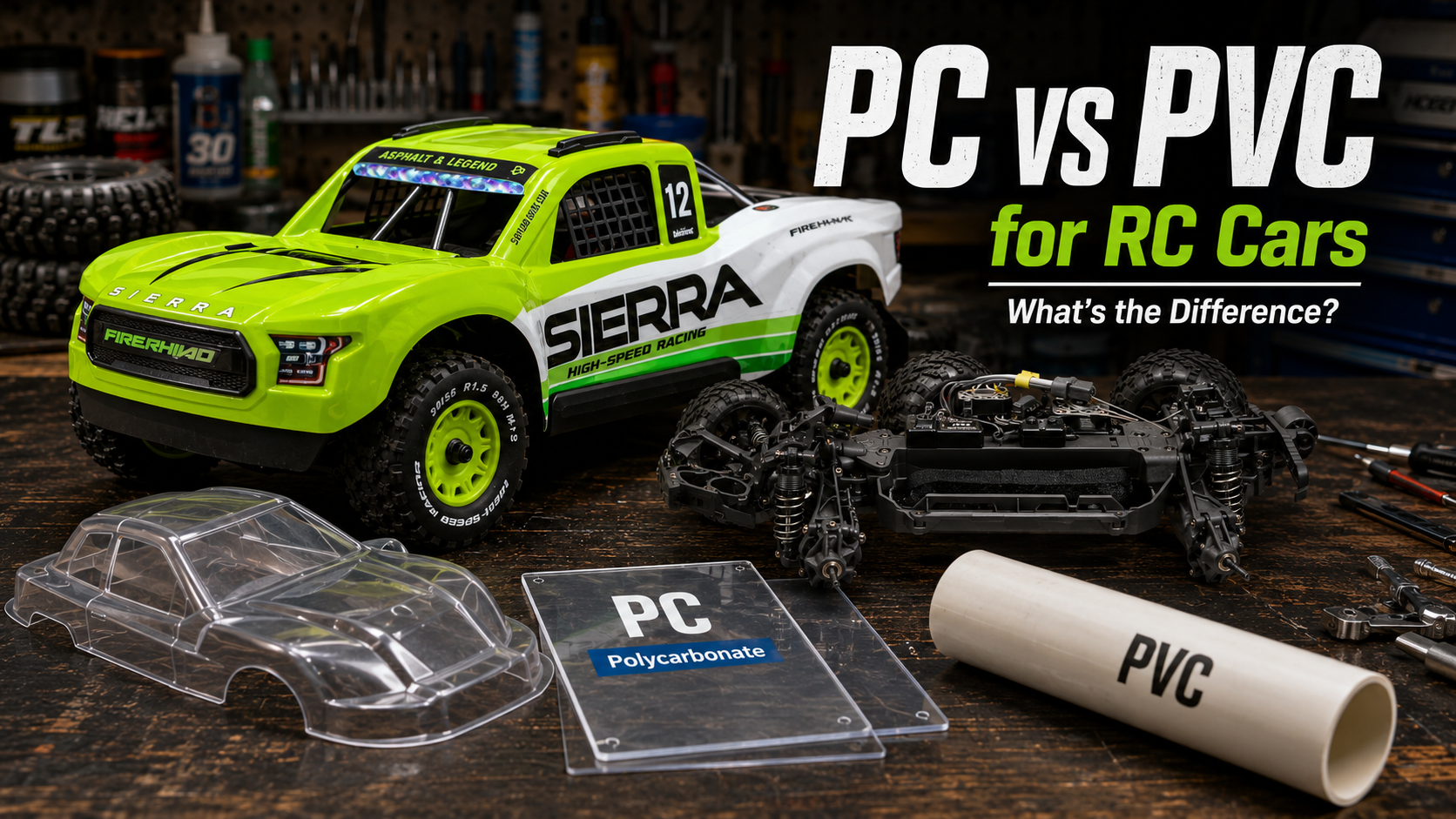
If you’re into RC cars, RC boats, RC planes, FPV gear, or custom model builds, you’ve probably seen the terms PC and PVC when shopping for body shells, clear sheets, protective covers, wire tubing, or DIY parts.
At first glance, PC and PVC sound similar, but they are very different materials. In simple terms:
PC is a tough, impact-resistant engineering plastic.
PVC is a lower-cost, easy-to-work general-purpose plastic.
For RC use, that difference matters a lot. Choosing the wrong material can lead to cracked body shells, warped parts, poor durability, or wasted money.
In this guide, we’ll break down the differences between PC and PVC, how each material is used in the RC hobby, and which one is better for common RC applications.
What Is PC?
PC stands for polycarbonate. It is a strong, clear engineering plastic known for its high impact resistance, good toughness, and better heat resistance than many common plastics.
In the RC world, PC is best known as the material used for many clear RC car bodies. When you see a clear RC body shell that you trim, paint from the inside, and mount onto your chassis, there’s a good chance it is made from polycarbonate.
PC is popular because it can handle crashes, rollovers, jumps, and rough driving much better than many cheaper plastics.
Common RC uses for PC include:
- Clear RC car bodies
- RC truck body shells
- Drift car bodies
- Crawler bodies
- Protective covers
- FPV camera guards
- Clear impact-resistant panels
- Custom DIY shields
What Is PVC?
PVC stands for polyvinyl chloride. It is one of the most widely used general-purpose plastics. PVC is affordable, easy to find, easy to cut, and available in both rigid and flexible forms.
In the RC hobby, PVC is not usually the first choice for body shells, but it can be useful for lower-stress parts and accessories.
Common RC uses for PVC include:
- Wire protection tubing
- Battery lead protection
- Simple dust covers
- DIY storage boxes
- Display stands
- Pipe-style structures
- Low-cost temporary parts
- Cable sleeves and protective covers
PVC is useful when you need something inexpensive and easy to work with, but it is not ideal for parts that need to survive hard impacts.
PC vs PVC: Key Differences
| Feature | PC | PVC |
|---|---|---|
| Full name | Polycarbonate | Polyvinyl chloride |
| Material type | Engineering plastic | General-purpose plastic |
| Impact resistance | Very high | Moderate |
| Clarity | Excellent | Can be clear, but usually not as clear as PC |
| Toughness | High | Depends on type; rigid PVC can be brittle |
| Heat resistance | Better | Lower |
| Flexibility | Tough and flexible under impact | Rigid PVC is stiffer; flexible PVC is softer |
| Cost | Higher | Lower |
| Common RC use | Body shells, protective covers, clear guards | Wire tubing, covers, storage, simple DIY parts |
The easiest way to remember it is:
Use PC for RC body shells, impact protection, and clear parts. Use PVC for wire protection, low-cost covers, and simple DIY accessories.
Why Are RC Car Bodies Usually Made from PC?
RC car bodies need to be lightweight, flexible, and impact-resistant. That is exactly where PC performs well.
RC cars go through a lot of abuse, including:
- High-speed crashes
- Rollovers
- Hard landings
- Track barriers
- Rock crawling impacts
- Body flex during aggressive driving
- Scrapes against pavement, dirt, and rocks
A brittle material would crack quickly under those conditions. PC is much better suited for RC body shells because it can bend and absorb impact without breaking easily.
That’s why many quality RC bodies are described as:
- PC body
- Polycarbonate body
- Clear PC body shell
- Lexan-style body
For most RC drivers, especially bashers, racers, drifters, and crawlers, PC is the better choice for a body shell.
Is PVC Good for RC Car Bodies?
In most cases, PVC is not recommended for RC car bodies.
PVC can be made into sheets, and some types can be clear, but it usually does not offer the same impact resistance, flexibility, or toughness as PC. Rigid PVC may crack under hard impacts, while flexible PVC may not hold shape well enough for a proper RC body.
PVC may be acceptable for static display models or simple non-impact parts, but for a running RC vehicle, PC is usually the safer and more durable option.
PVC is better suited for RC applications such as:
- Wire sleeves
- Cable protection
- Simple dust shields
- Storage dividers
- Display bases
- Temporary test parts
- Low-stress brackets
PVC is not ideal for:
- High-impact RC body shells
- Crash guards
- Skid plates
- Motor-area parts
- Battery box structures
- Parts exposed to high heat
- Parts that need repeated bending
Is PC More Expensive Than PVC?
Yes. PC usually costs more than PVC.
That higher cost comes from its stronger performance. PC is an engineering plastic, while PVC is a general-purpose plastic. PC offers better impact resistance, better toughness, better clarity, and better heat resistance, which makes it more expensive to produce and buy.
For RC hobbyists, the rule is simple:
If the part needs to survive crashes, bending, or high-speed use, PC is usually worth the extra cost.
If the part is only for cable protection, storage, display, or a simple low-stress DIY project, PVC is often the more budget-friendly choice.
Which Material Should RC Hobbyists Choose?
Choose PC for RC Body Shells
If you are buying or making an RC car body, truck body, drift body, crawler body, or clear protective shell, choose PC.
PC is lightweight, clear, tough, and impact-resistant. It is also ideal for inside painting, which is why most clear RC bodies are painted from the inside.
Choose PVC for Wire Protection
If you need to protect battery leads, servo wires, lighting wires, receiver wires, or other cables, PVC tubing or flexible PVC sleeves can work well.
PVC is affordable, easy to cut, and easy to install.
Choose PC for Clear Protective Covers
For FPV camera covers, electronics shields, clear guards, and impact-resistant panels, PC is usually the better choice.
Its clarity and toughness make it better suited for parts that need both visibility and protection.
Choose PVC for Low-Cost DIY Parts
For simple storage, display stands, pipe-style structures, dust covers, and temporary test pieces, PVC can be a practical option.
Just avoid using PVC near high-heat areas such as motors, ESCs, exhaust components, or parts exposed to prolonged heat.
Pros and Cons of PC
Pros of PC
- Excellent impact resistance
- High clarity
- Good toughness
- Better heat resistance than PVC
- Great for RC body shells
- Good for protective covers
- Less likely to crack under impact
Cons of PC
- More expensive than PVC
- Can scratch more easily
- Slightly harder to process
- May react poorly with certain chemicals or solvents
Pros and Cons of PVC
Pros of PVC
- Lower cost
- Easy to find
- Easy to cut and shape
- Good for tubing and sleeves
- Good for low-cost DIY projects
- Available in rigid and flexible forms
Cons of PVC
- Lower impact resistance than PC
- Lower heat resistance
- Rigid PVC can be brittle
- Not ideal for RC body shells
- Not recommended for high-impact RC parts
PC vs PVC for RC Applications
| RC Application | Better Choice | Why |
|---|---|---|
| RC car body | PC | Better impact resistance and flexibility |
| RC truck body | PC | Handles crashes and rollovers better |
| Drift car body | PC | Lightweight, clear, and easy to paint from inside |
| Crawler body | PC | More durable during rollovers and rock contact |
| FPV camera cover | PC | Clear and impact-resistant |
| Wire protection | PVC | Affordable and easy to install |
| Cable sleeve | PVC | Flexible and budget-friendly |
| Display stand | PVC | Low cost and easy to build |
| Temporary DIY part | PVC | Cheap and easy to modify |
| High-impact guard | PC | Stronger and tougher |
FAQ: PC vs PVC for RC Hobbyists
Is PC better than PVC for RC cars?
For RC body shells and impact parts, yes. PC is usually better because it is stronger, tougher, and more impact-resistant than PVC.
Why are RC bodies made from PC?
RC bodies are made from PC because it is lightweight, clear, flexible, and resistant to cracking under impact. It also allows hobbyists to paint the inside of the body for a cleaner and more durable finish.
Can PVC replace PC?
PVC can replace PC in some low-stress applications, such as tubing, covers, storage parts, or display pieces. However, PVC is not a good replacement for PC when the part needs to handle crashes, flexing, or repeated impacts.
Is PC more expensive than PVC?
Yes. PC is usually more expensive than PVC because it offers better strength, clarity, toughness, and heat resistance.
Which material should beginners choose?
For RC body shells, clear guards, and protective covers, choose PC.
For wire tubing, simple covers, storage pieces, and low-cost DIY accessories, choose PVC.
Final Thoughts: PC vs PVC for RC Use
PC and PVC both have a place in the RC hobby, but they are not interchangeable.
PC is the better choice for RC body shells, clear protective covers, and impact-resistant parts.
PVC is the better choice for wire protection, tubing, low-cost storage, display stands, and simple DIY accessories.
For most RC hobbyists, the best rule is:
Use PC when strength, impact resistance, and clarity matter. Use PVC when cost, easy cutting, and simple protection matter more.
Share:
UD1610PRO Stick Center Calibration – Fix Off-Center RC Controller